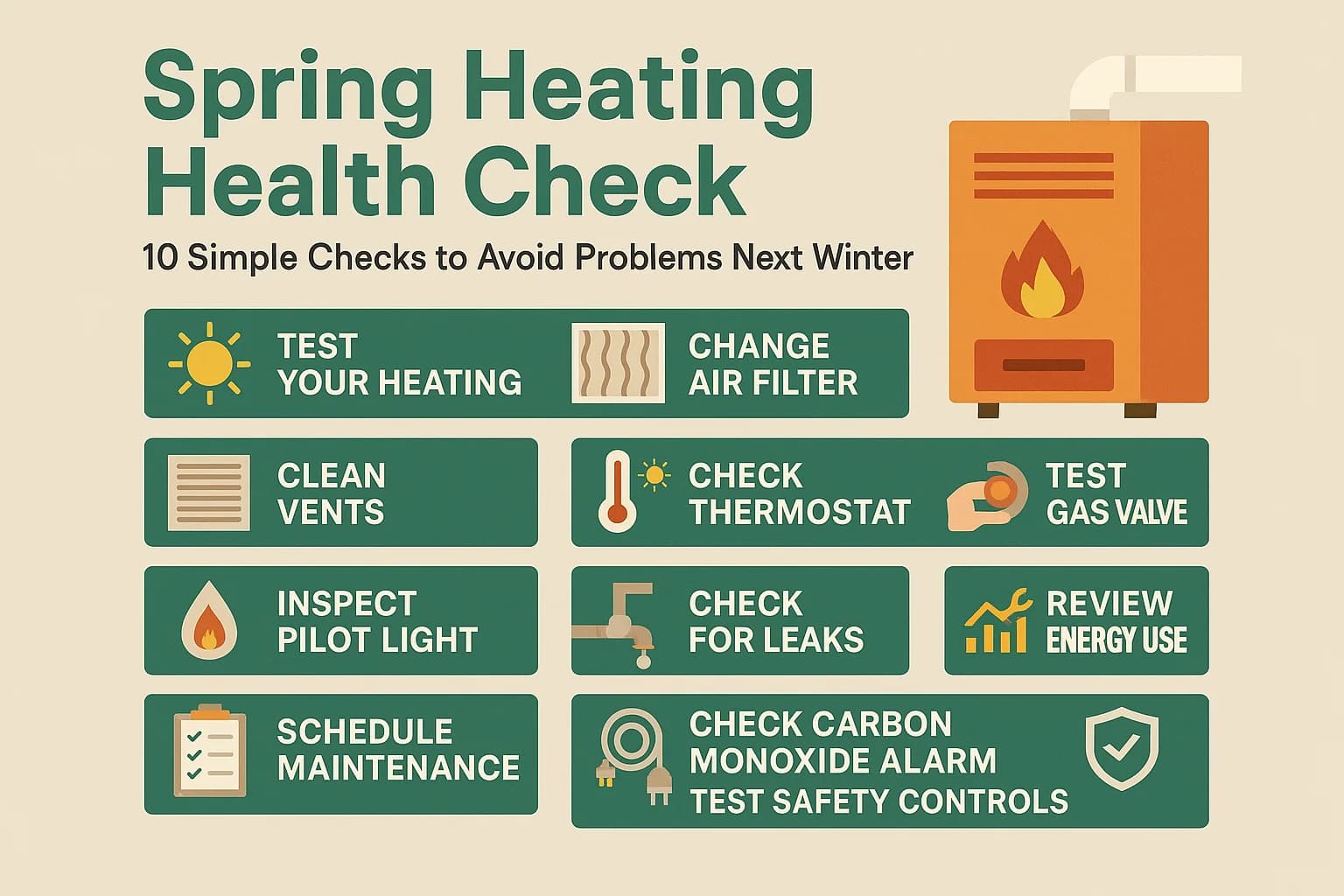
Spring Heating Health Check: 10 Simple Checks to Avoid Problems Next Winter
As the days grow longer and the chill of winter fades, it's tempting to forget about your heating system until the first cold snap returns. However, spring is actually the perfect time for homeowners across North Lincolnshire to give their heating a thorough health check. Addressing minor issues now can prevent costly breakdowns and inefficiencies next winter, ensuring your home stays warm and your energy bills stay manageable.
At ICY Solutions, we've been helping Scunthorpe, Brigg, Barton-upon-Humber, and surrounding areas with their plumbing and heating needs for years. As a Gas Safe, OFTEC, and REFCOM registered company with accreditations from leading manufacturers like Worcester Bosch, Viessmann, Baxi, Grant, Vaillant, and Ideal, we know what it takes to keep a system running smoothly. Here are 10 simple checks you can perform this spring to avoid problems when you need your heating most.
1. Check Your Boiler Pressure
Your combi or system boiler should have a pressure gauge, typically showing between 1 and 1.5 bar when cold. If it's below 1 bar, you may need to repressurise it using the filling loop (consult your manual). Low pressure can cause your boiler to lock out or run inefficiently.
2. Listen for Unusual Noises
Turn your heating on for 15-20 minutes. Listen for banging, gurgling, or whistling noises from radiators or the boiler itself. These sounds often indicate air in the system (needing bleeding) or potential pump issues.
3. Bleed Your Radiators
If your radiators have cold spots at the top, they likely contain trapped air. Use a radiator key to gently open the bleed valve at the top until a steady stream of water appears (have a cloth ready to catch drips). This simple task improves efficiency and heat output.
4. Inspect for Leaks and Drips
Check around your boiler, pipework, radiators, and under sink areas for any signs of moisture, corrosion, or green deposits (from copper pipes). Even a small drip can indicate a failing seal or corrosion that will worsen over time.
5. Test Your Thermostat and Controls
Ensure your room thermostat, programmer, and any smart controls are functioning correctly. Try adjusting the temperature setting to confirm the boiler responds. Consider upgrading to a modern programmable thermostat for better energy control.